Gondor Gears · Bike History
The Journey So Far
"Four wheels move the body. Two wheels move the soul."
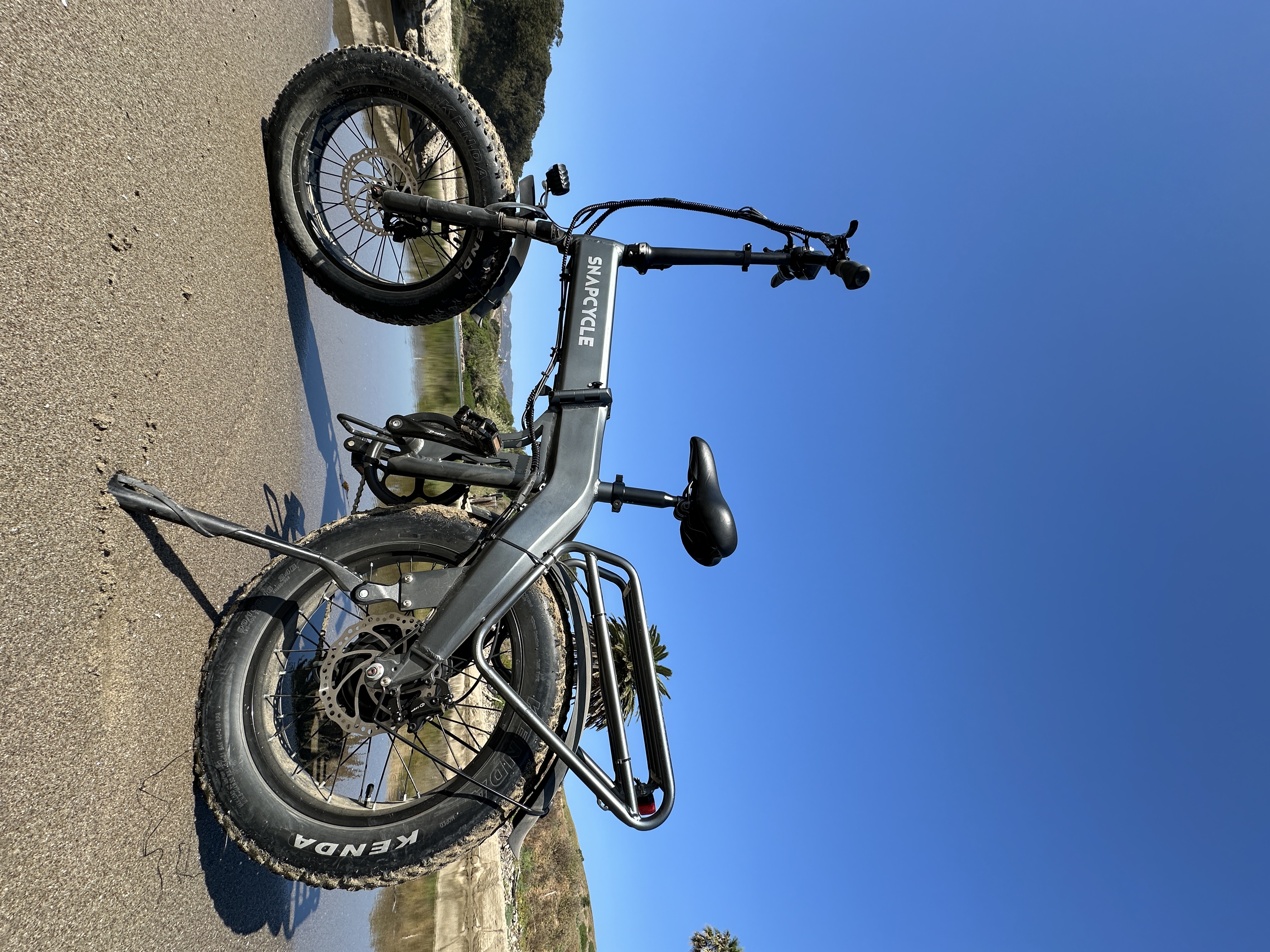
A folding fat bike, a baby moon, and the ride that started everything.
The Snapcycle S1 was a bet on myself. A small one. I wasn't sure this hobby would stick, so I kept it cheap and kept my expectations modest. The folding form factor sold me on a fantasy: a bike that lived in my trunk, ready to unfold at a moment's notice for impromptu adventures.
The bike, it turned out, had other ideas. It was far too heavy to realistically toss in and out of a car. But the dream was real even if the execution wasn't. It still got me out there, to places I wouldn't have reached otherwise, and it was the Snapcycle that first taught me the pure joy of electric-assist riding.
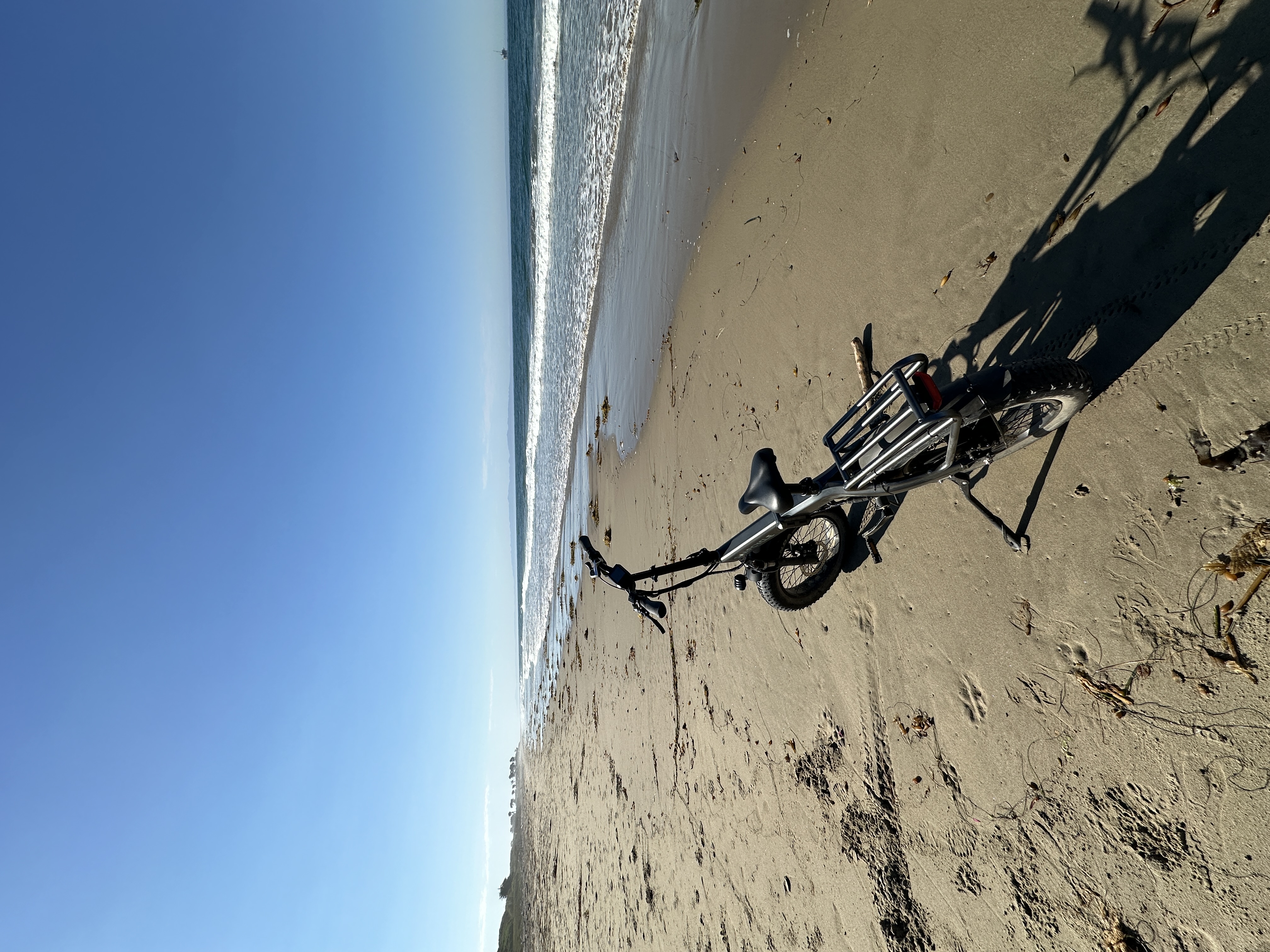
The most vivid memory lives in Santa Barbara. My wife and I were there for our babymoon, staying at the Four Seasons. One morning I slipped out early and took the Snapcycle down to the beach. The ride was quiet and wide open. Then everything happened at once.
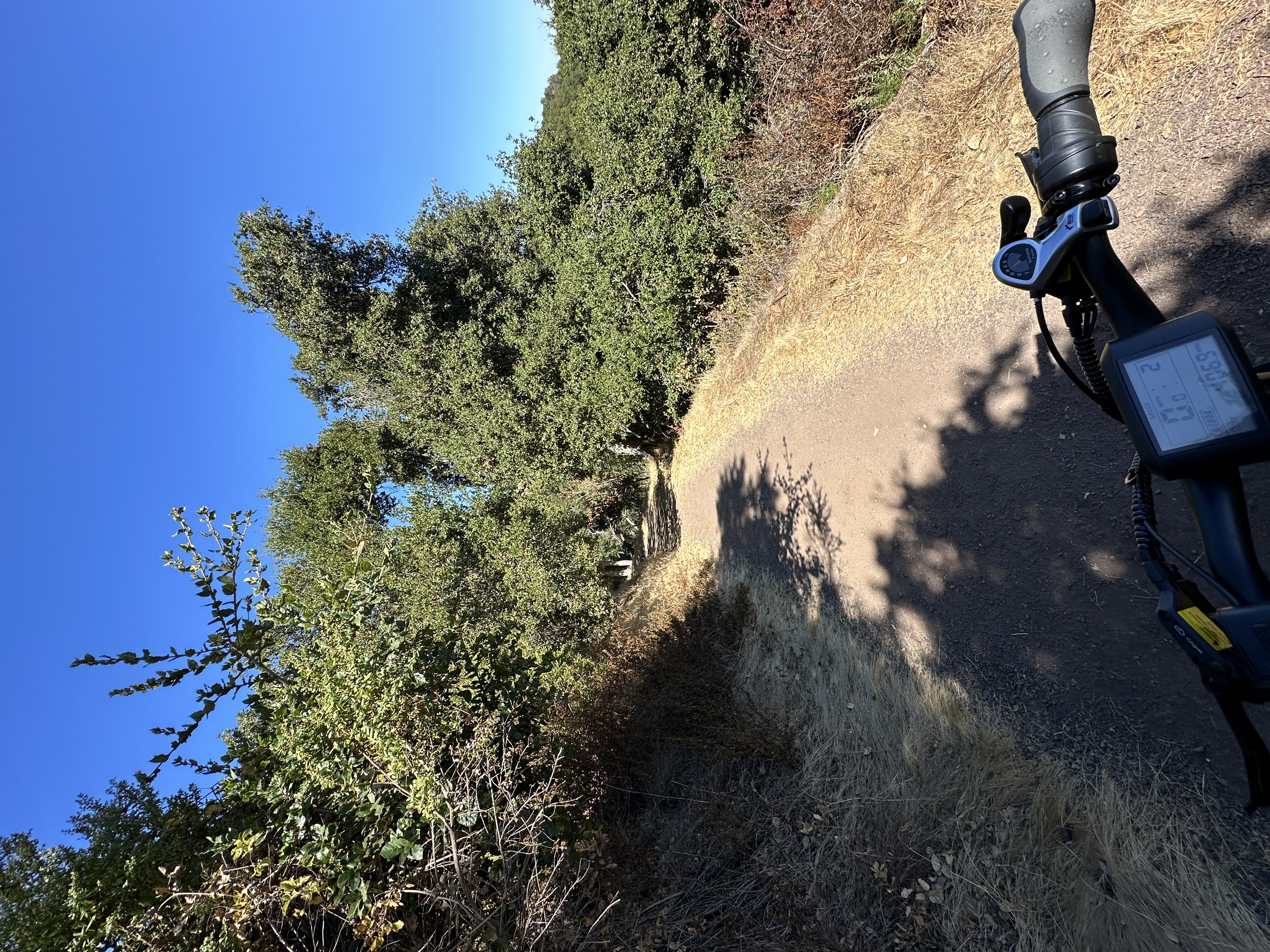
I pushed the Snapcycle up to the top of Heintz Outdoor Space, a genuinely brutal climb it barely survived. The descent was something else entirely. The telescoping stem connecting the handlebars felt terrifyingly loose at speed. Coming down that hill, hands white-knuckling the bars, I made my mind up on the way down. It was time to upgrade.
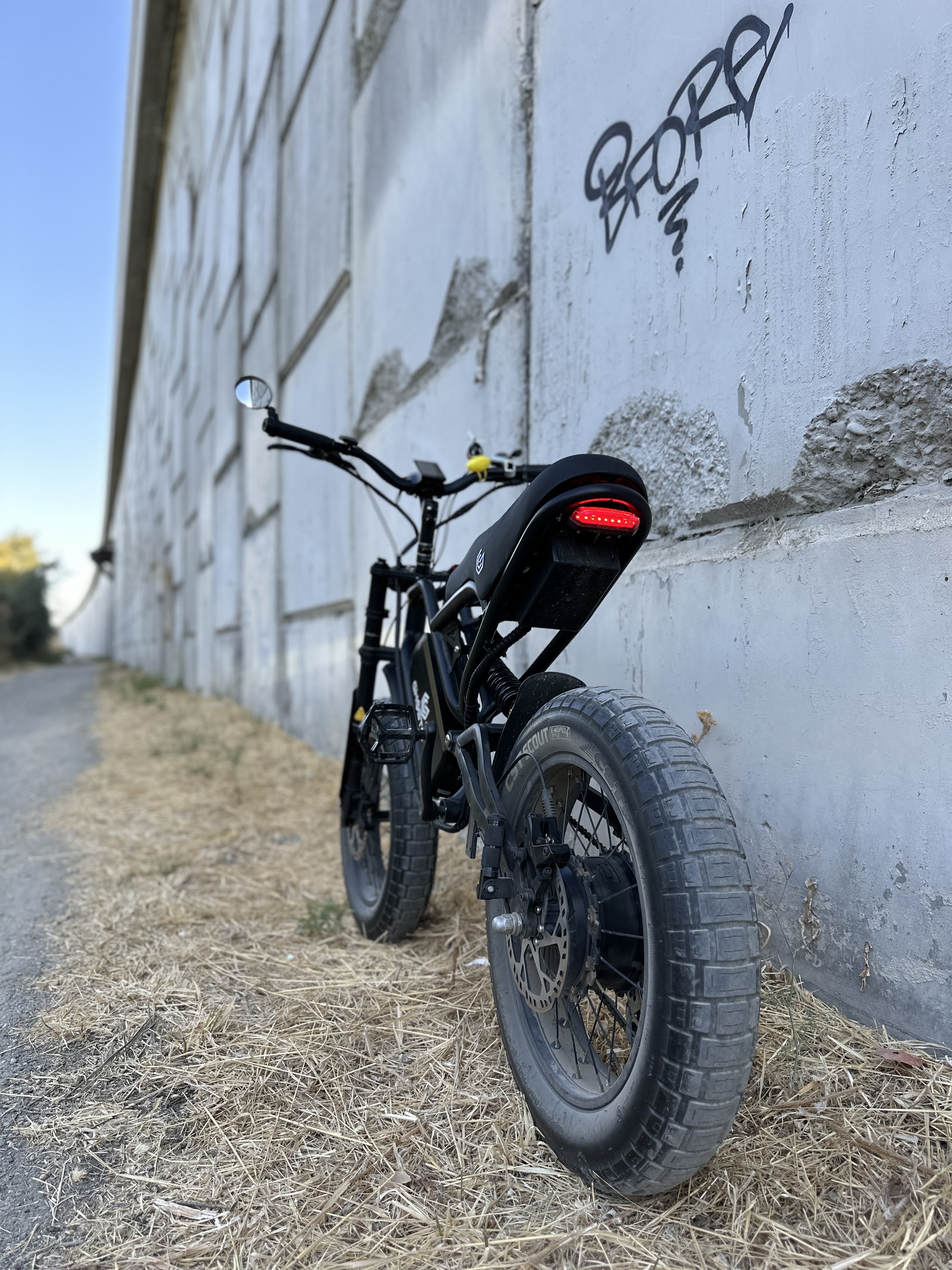
Serious torque, serious moto vibes. The bike that mapped the South Bay.
I'd been eyeing the Ariel X Class 52V as my upgrade, but it felt flat when I dug into it. The Ghostcat F3X Pro was different. The torque, the suspension, the silhouette. It had real moto energy. It looked and felt like something with intent.
That torque was no joke. The Ghostcat took time to tame. I didn't feel fully comfortable on it for a while, and that learning curve was part of what made it special. Once I found my footing, it opened up. A true dual-sport machine, equally at home on pavement, gravel, and dirt.
One of my favorite things to do on the Ghostcat was high speed descents on twisty mountain roads lined with redwoods. Shannon Road was the gold standard. Wide open throttle, the trees blurring on either side, the road snaking downhill. There is something genuinely joyful about riding a slow bike fast on roads like that. You feel every curve, every patch of light breaking through the canopy. The Ghostcat was absolutely in its element.
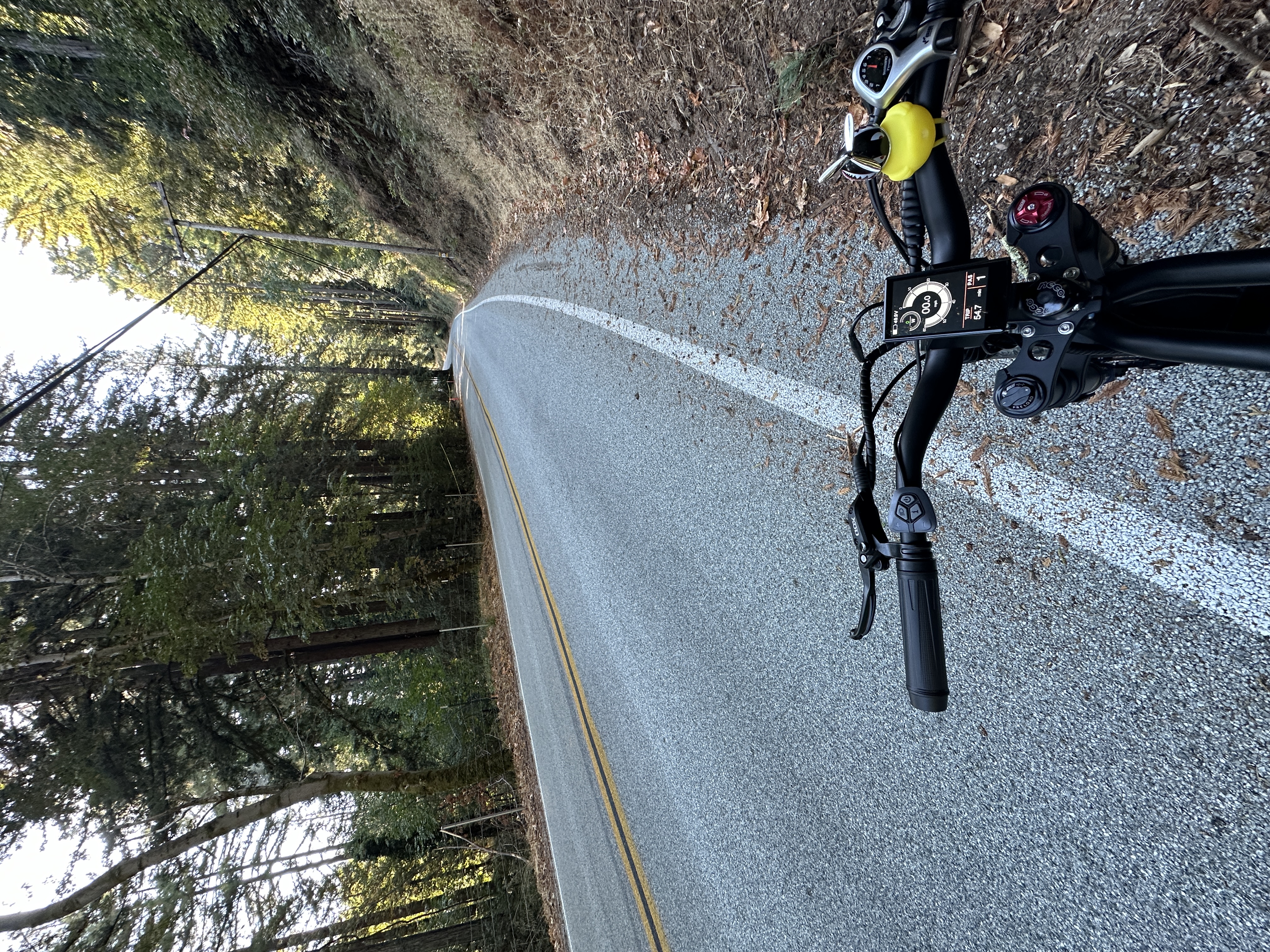
There’s this scene in Return of the Jedi where Luke and Leia are being chased while riding speeders on Endor. The way they flew through the forest with the engines howling has been something I’ve thought about often.
I went back to Shannon Road again today. I blasted down the road at wide open throttle. The bike’s geared hub motor howled just like the speeders. I honestly don’t know how long the descent lasted. Time felt like it slowed down while everything warped around me.
The Ghostcat became the bike that mapped my world. I built the bulk of my South Bay routes on it: Campbell to the Bay, Alviso Park, Shoreline. The standout ride: a full out-and-back from Campbell to Calero Reservoir. Long, varied terrain, real distance. That ride felt like an actual adventure.
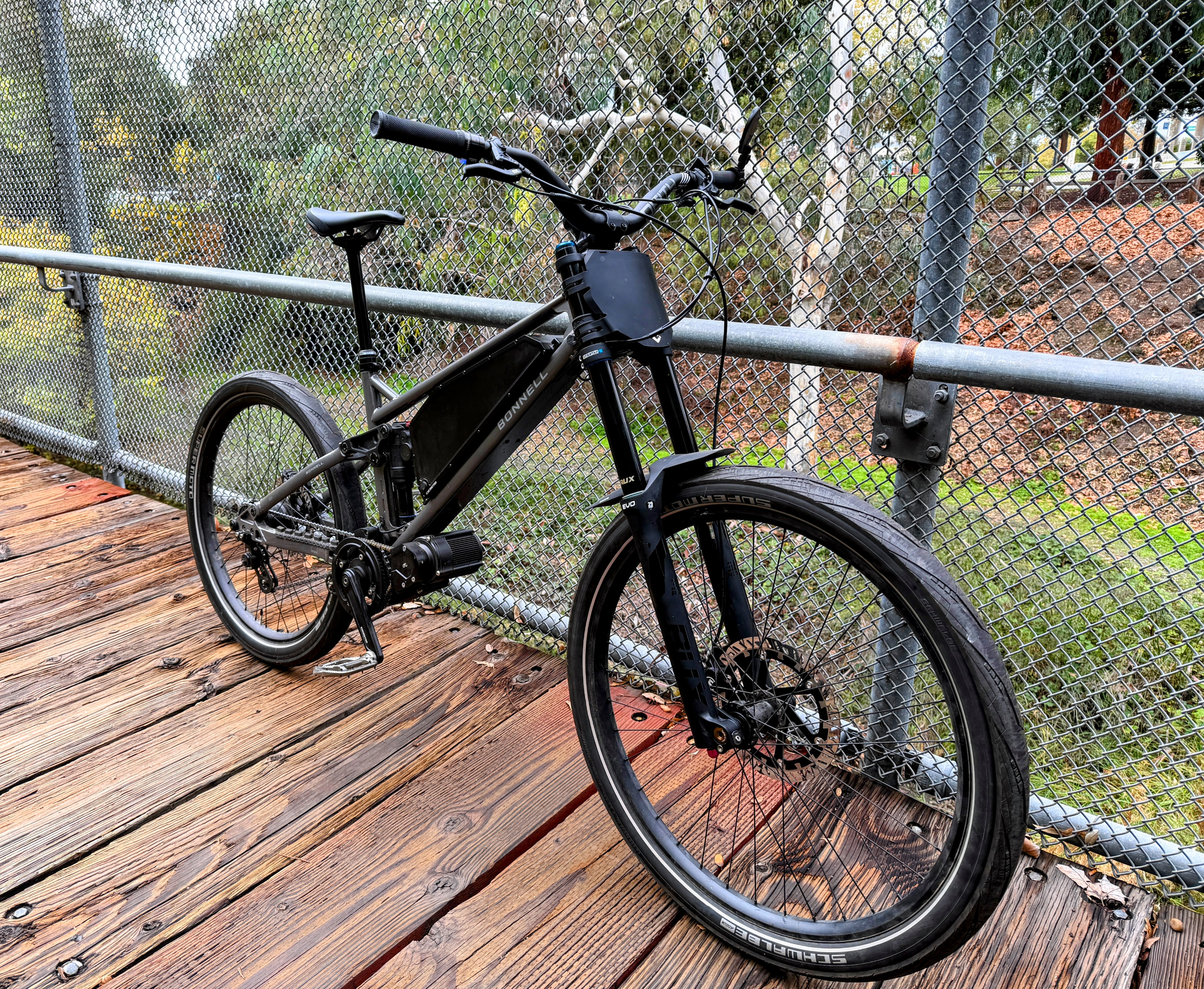
A mountain bike that became a supermoto. A fitness tool hiding in a moto machine.
Mountain biking had always called to me. The 775MX had a throttle. I loved the idea of throttling to the trailhead and pedaling singletrack like a proper MTB. Then inspiration struck: why not use this platform as the foundation for a proper supermoto build? The bike pivoted.
It became a supermoto. That had been a lifelong dream: the sleek stance, the road-shredding agility. I swapped to Schwalbe Supermoto rubber and changed the rear sprocket to 22T. The result: a 40mph capable urban weapon.
The heart of the 775MX is its CYC mid-drive motor paired with that massive integrated battery. The torque sensor made every pedal stroke feel alive, responsive in a way throttle-only bikes never quite match. You work with it, not against it.
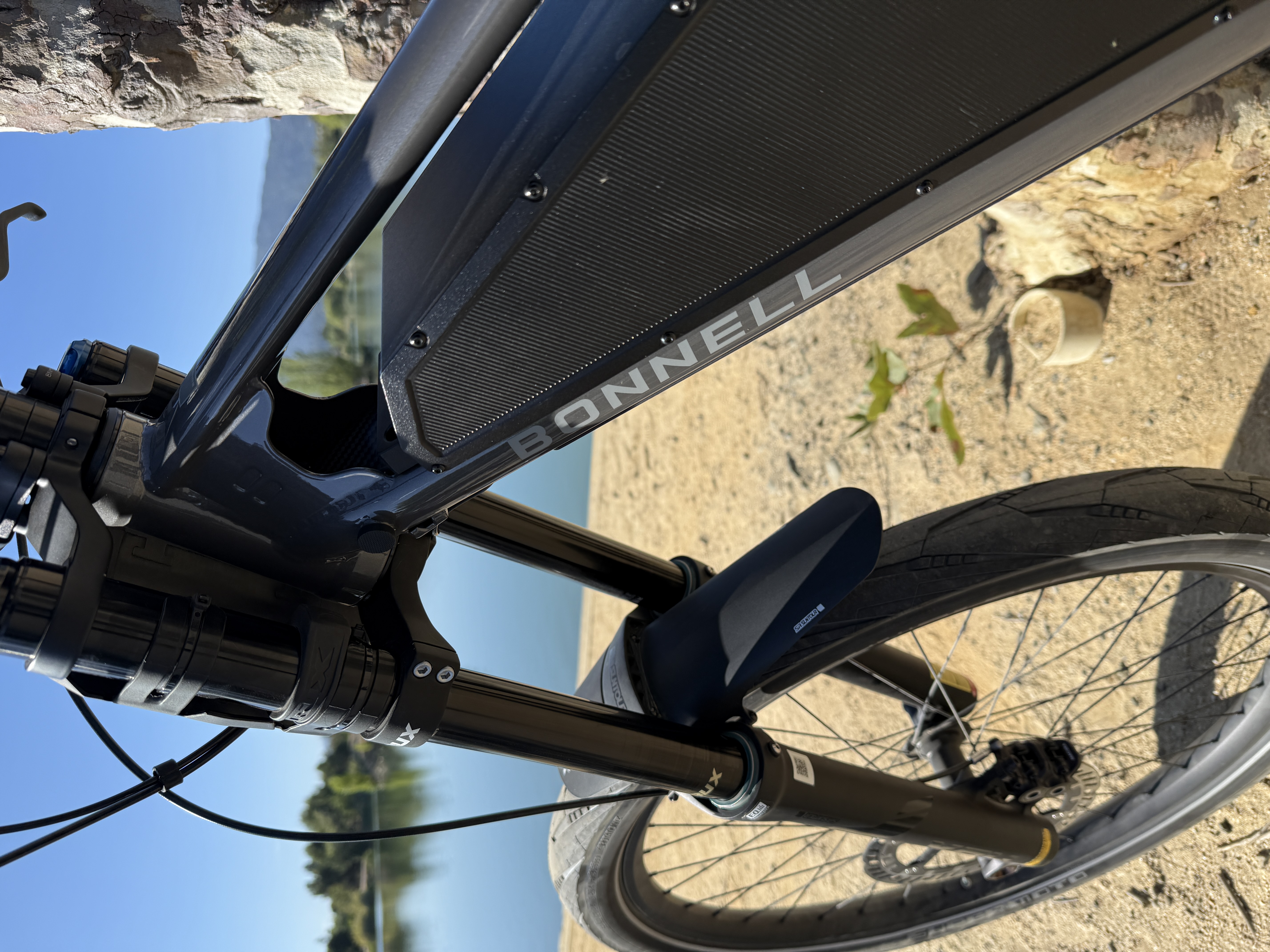
I thought it would ride like a moto. It ended up making me a better cyclist.
The CYC motor's torque sensor turned every pedal stroke into something responsive, alive. I started sprinting off stops just to feel it. My cardio improved. My legs got stronger. A bike I bought to go fast ended up reconnecting me with the physical side of riding. The 775MX unlocked downtown San Jose, Alum Rock Park, Coyote Creek Trail, and old neighborhoods I hadn't seen in years.
The machine that's supposed to break every ceiling that came before it.
The Onyx RCR 80V hasn't arrived yet. It's purchased, it's inbound. Everything about it represents the full arc of this journey. From a cheap folding bike tested on a whim, to one of the most serious electric mopeds on the market. This isn't an impulse buy. It's the product of three bikes' worth of knowing exactly what you want.
Motorcycle DNA throughout. 80V, a massive hub motor, and a battery built to stop worrying about range. After years of pushing the limits of each machine, the question is finally: what happens when the machine stops being the limit?
Mt. Umunhum is in the crosshairs. Summit it and have enough battery left to ride home. That's the real test.
Motorcycle parts throughout. A machine built to this standard from the factory. No wrenching required on day one.
Load up potential houses. Plug in the addresses. Ride the neighborhoods with real turn-by-turn. House hunting, reimagined.
Every bike pushed the radius further. The Onyx is supposed to end that conversation entirely.
The next chapter writes itself.
The Real Journey
A cheap folding bike became a window into a hobby. A torquey dual-sport became a map of the South Bay. A supermoto build became a fitness routine and a mechanical education. Each bike gave something the next one built on.
What started as hedged curiosity became a serious, committed practice: routes logged, skills built, neighborhoods explored, hills climbed and descended, mornings stolen from a busy life for just a few more miles. The bikes changed. The rider did too.